






• Skip to primary navigation
  • Skip to main content
  • Skip to primary sidebar
The Wonderful World of Sprouts logo
  • About
  • Subscribe
  • Site Index
  • Shop
  • Contact Us
menu icon
go to homepage
  • About
  • Subscribe
  • Site Index
  • Shop
  • Contact Us
subscribe
search icon
Homepage link
  • About
  • Subscribe
  • Site Index
  • Shop
  • Contact Us
×
  • Trays containing different types of seedlings in various colors and stages of growth arranged in neat rectangular sections.
    6 Best Growing Mats for Microgreens
  • A person wearing orange gloves is sitting on the floor indoors, handling potted green plants with a beige sofa in the background.
    Best Seeds for Sprouting at Home (With Tips for Each One)
  • Two slices of toast topped with avocado, tomato, mushrooms, sprouts, and one with sliced boiled egg, served on a dark plate.
    How to Use Sprouts in Smoothies, Sandwiches, and Snacks
  • Three different types of microgreens, including green and purple varieties, are arranged in rows on a dark textured surface.
    9 Most Nutritious and Healthiest Microgreens to Eat Daily, Backed by Science
  • A close-up of a plant-based dish featuring chickpeas, leafy greens, sliced tomato, a lemon wedge, sprouts, and an edible flower.
    12 Best Microgreens to Eat for Flavor and Nutrition (Ranked and Explained)
  • Close-up of seed germination, showing brown seeds and white sprouting roots on a dark, moist surface, with some dense white fuzz among the green sprouts.
    Why Your Sprouts Are Fuzzy — And When to Worry
  • Person wearing red gloves holds a clear plastic container of green microgreens, showing roots and stems growing in soil.
    What to Do With Leftover Sprouts — And Why You Shouldn’t Toss Them
  • A person arranges fresh microgreens on a table with pears and an amber glass jar nearby, showcasing the lush harvest achieved using the best grow lights for microgreens.
    Best Grow Lights for Microgreens That Actually Work
  • Whole almonds and walnut pieces, perfect for sprouting nuts and seeds, are scattered on a beige surface, with two wooden spoons holding some of the nuts.
    A Guide to Sprouting Nuts and Seeds
  • A top view of various leafy green herbs arranged in rows next to three small gardening tools on a white background, with hands visible at the top and bottom—perfect inspiration for learning how to grow microgreens without soil.
    How to Grow Microgreens Without Soil
  • A close-up of green sunflower sprouts with black seed coats, growing densely in a clear plastic container, showcases how the best sprouting trays support healthy and abundant growth.
    5 Best Sprouting Trays for Easy Home Growing
  • A close-up of various colorful sprouts, including green leaves and pink stems, densely packed together.
    The Easiest Sprouts to Grow Indoors (No Soil Needed!)
Home » Microgreens

5 Best Growing Mediums for Microgreens

Published: Jul 19, 2025 by Kristen Wood · Disclaimer: As an Amazon Associate I earn from qualifying purchases.

Your chosen growing medium for microgreens can play a huge role in how well your greens thrive! Each one has its pros and cons, but some naturally stand out for supporting healthy root growth and preventing mold growth, leading to a lush harvest. Below are some of the most trusted types of grow media used by professional and home growers alike. 
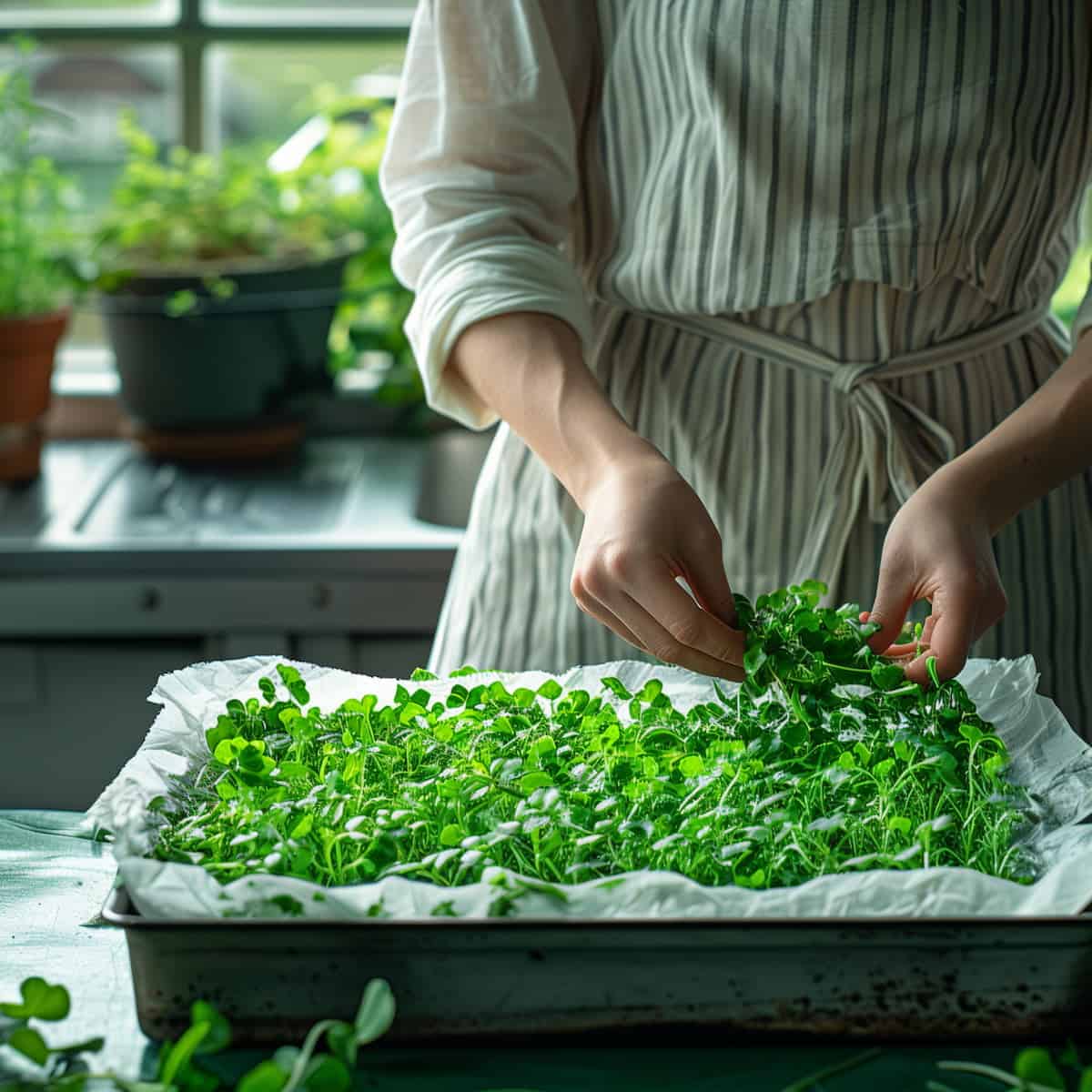
A person in an apron harvests microgreens from a tray lined with parchment paper, using it as a growing medium for microgreens, with potted plants visible in the background on a kitchen counter.
Photo credit: Yay Images

Recommended Growing Medium For Microgreens

1. Coconut Coir

Made from coconut husks, coconut coir (or coconut fiber) is a popular and sustainable option if you’re growing microgreens at home, like broccoli or radish.

It provides good aeration and retains moisture well without suffocating the roots, which is essential in preventing root rot. Additionally, it’s naturally rich in hormones that can encourage healthy plant growth.

Coconut coir can be used in most trays with drainage holes and is compatible with other growing systems such as hydroponics or mineral-based options.   

2. Hemp Mats

Hemp grow mats are made from natural hemp fibers. Most come pre-cut to fit standard grow trays, but you can also trim them down to size if you need them to fit other pots and trays.

They’re beginner-friendly since you only need to sprinkle the seeds on top of the mats and keep them moist to start growing microgreens immediately.

Hemp mats are also 100% biodegradable, so you can compost them once you no longer need them for growing your greens.

3. Jute Mats

Natural fibers from the jute plant make up jute mats. They are firm and water-absorbent bases for growing microgreens.

The material is porous, allowing for good air circulation that the plants need to thrive. It’s also durable and versatile, as you can use the mat to support heavier microgreens like sunflower and pea shoots or smaller types like radish and arugula.

Using jute mats makes cleanup simple and eco-friendly, even after a harvest.     

Trays of microgreens at different growth stages, with red, green, and black seeds sprouting on soil—the ideal growing medium for microgreens—in distinct sections.
Photo credit: Yay Images

4. Vermiculite And Perlite

Growers use these mineral-based options as a growing medium for microgreens. Vermiculite holds water well, while perlite improves circulation by trapping air pockets.

Together, they prevent the surface from becoming too wet or soggy, thereby reducing the risk of mold on microgreens. You can use them in hydroponic systems or mixed with organic grow media like compost, coco coir, or peat moss.

They’re lightweight and reusable, making them a practical choice for indoor or small-scale growers.   

5. Hydroponic System

This system relies on water-based setups, along with other growing mediums such as mats, vermiculite, and perlite, to support the growth of the seeds.

Hydroponics offers excellent control over light exposure, air circulation, moisture levels, and nutrient availability. These are key elements for a successful harvest.

Advanced growers favor them because they offer a more efficient, soil-free method for producing food indoors or in smaller spaces.

With the proper setup, a hydroponic system might encourage faster growth cycles and produce larger yields than other traditional methods of growing microgreens at home.    

Pin For Later

A person wearing a striped apron tends to fresh microgreens on a tray, highlighting the best growing medium for microgreens, with the text "5 Best Growing Mediums for Microgreens" displayed at the bottom.

You Might Also Like

12 Best Microgreens to Eat for Flavor and Nutrition (Ranked and Explained)

Best Grow Lights for Microgreens That Actually Work

How to Grow Microgreens Without Soil

« Best Seeds for Sprouting at Home (With Tips for Each One)
6 Best Growing Mats for Microgreens »

About Kristen Wood

Kristen Wood is a writer, photographer, cookbook author, recipe developer, and avid sprouter. Her work has been featured in various publications including Chicago Sun-Times, Martha Stewart, Elle, Healthline, Willow & Sage Magazine, and Food Drink Life. She is also a syndicated writer for The Associated Press.

Reader Interactions

Comments

No Comments

Leave a Reply Cancel reply

Your email address will not be published. Required fields are marked *

Recipe Rating


Primary Sidebar

Welcome!

About


Footer

↑ back to top

About

  • Privacy Policy
  • About

Newsletter

  • Subscribe

Contact

  • Contact

Copyright © 2025 The Wonderful World of Sprouts